
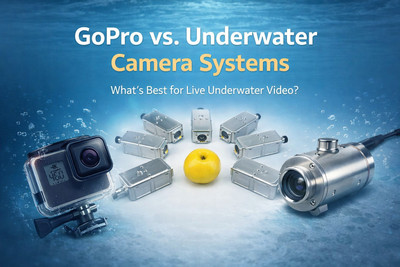
GoPro vs Underwater Camera System – What Works for Live Video?
Apr 19th 2026
GoPro vs Underwater Camera System – What Works for Live Video?
If you’ve tried to stream video underwater using a GoPro, you already know — it doesn’t work the way you expect.
This article explains why GoPro struggles underwater and what professional systems use instead for reliable live video, inspection, and monitoring.
The Problem with GoPro Underwater
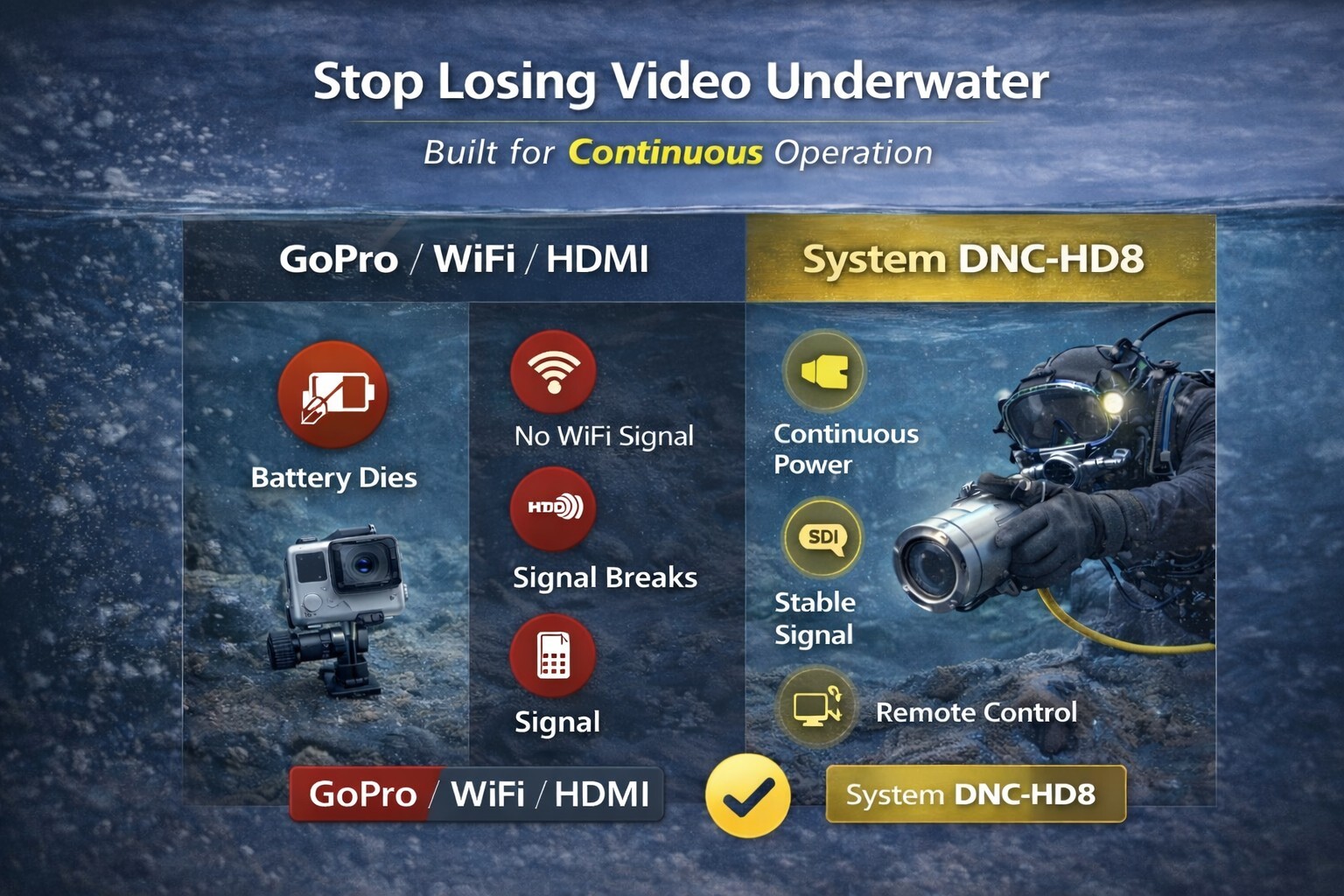
GoPro cameras are excellent for recording short clips, but they are not designed for continuous underwater operation.
- Battery limitation – limited runtime
- No WiFi underwater – signal does not travel through water
- HDMI instability – unreliable over long cable distances
- No remote control once submerged
Result: GoPro works for short recordings, but fails for live monitoring and long-duration use.
What Professionals Use Instead
In underwater inspection, aquaculture, offshore operations, and pool environments, professionals use purpose-built underwater camera systems.
- Surface-powered systems (no batteries)
- Stable SDI video transmission
- Remote camera control
- Single cable for power, video, and control
This allows continuous, real-time video from underwater to the surface.
Key Differences: GoPro vs Underwater Camera System
| Feature | GoPro | Underwater Camera System |
|---|---|---|
| Power | Battery | Continuous from surface |
| Signal | WiFi / HDMI (unstable) | SDI (stable long distance) |
| Runtime | Limited | Unlimited |
| Control | Limited underwater | Full remote control |
| Use Case | Short recording | Inspection & monitoring |
Why Cable-Based Systems Work
The key difference is simple: one cable replaces everything.
A professional underwater camera system uses a single waterproof cable to deliver:
- Power
- Video signal
- Camera control
This eliminates weak points like batteries, wireless connections, and unstable signals.
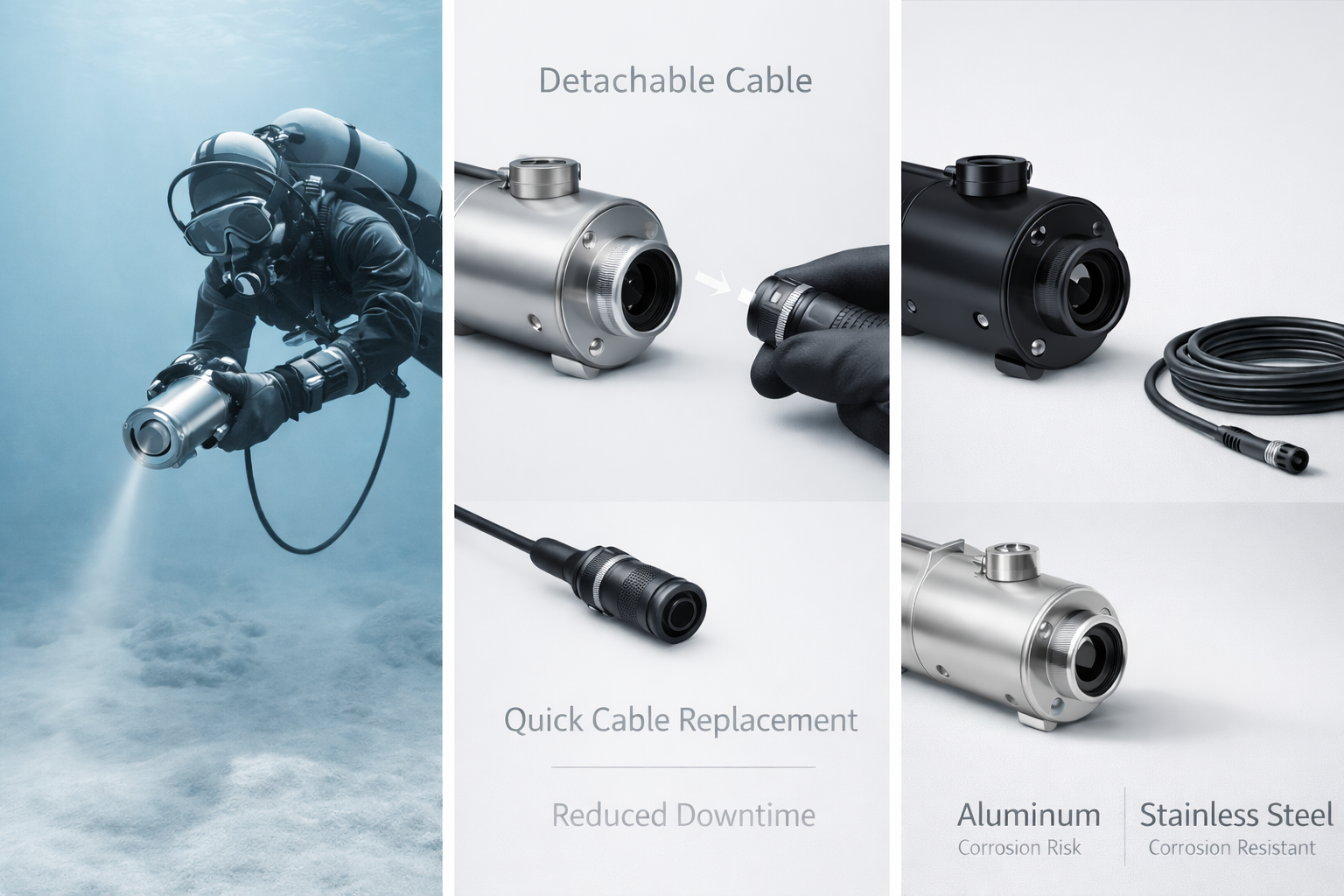
Detachable Cable Advantage (Critical for Real Use)
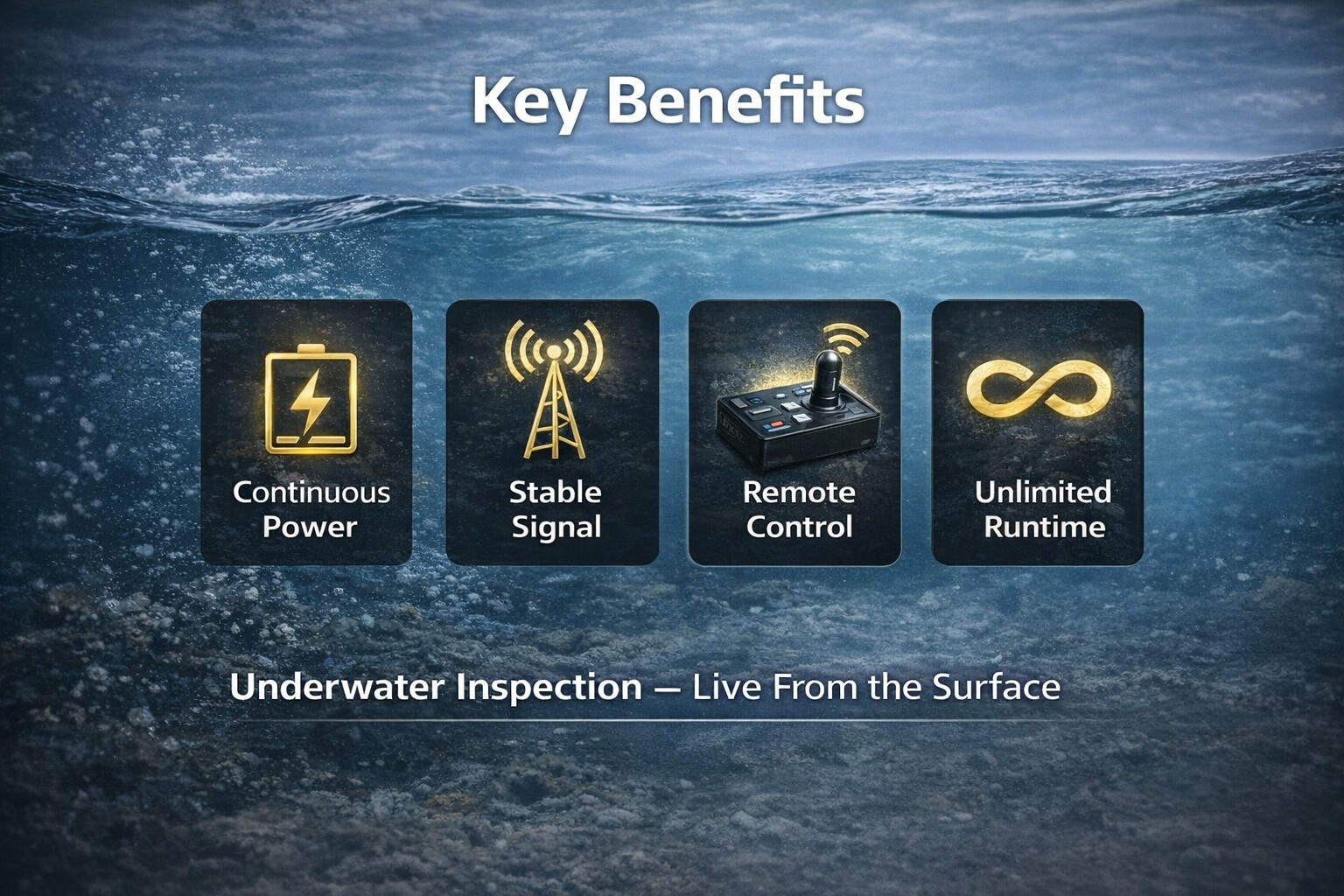
Professional systems use a detachable cable design, which is essential for reliability in the field.
- Replace damaged cables instantly
- No need to send the entire system for repair
- Lower maintenance cost
- Flexible cable lengths (30m / 50m / 100m)
This is especially important in offshore and remote environments where downtime is expensive.
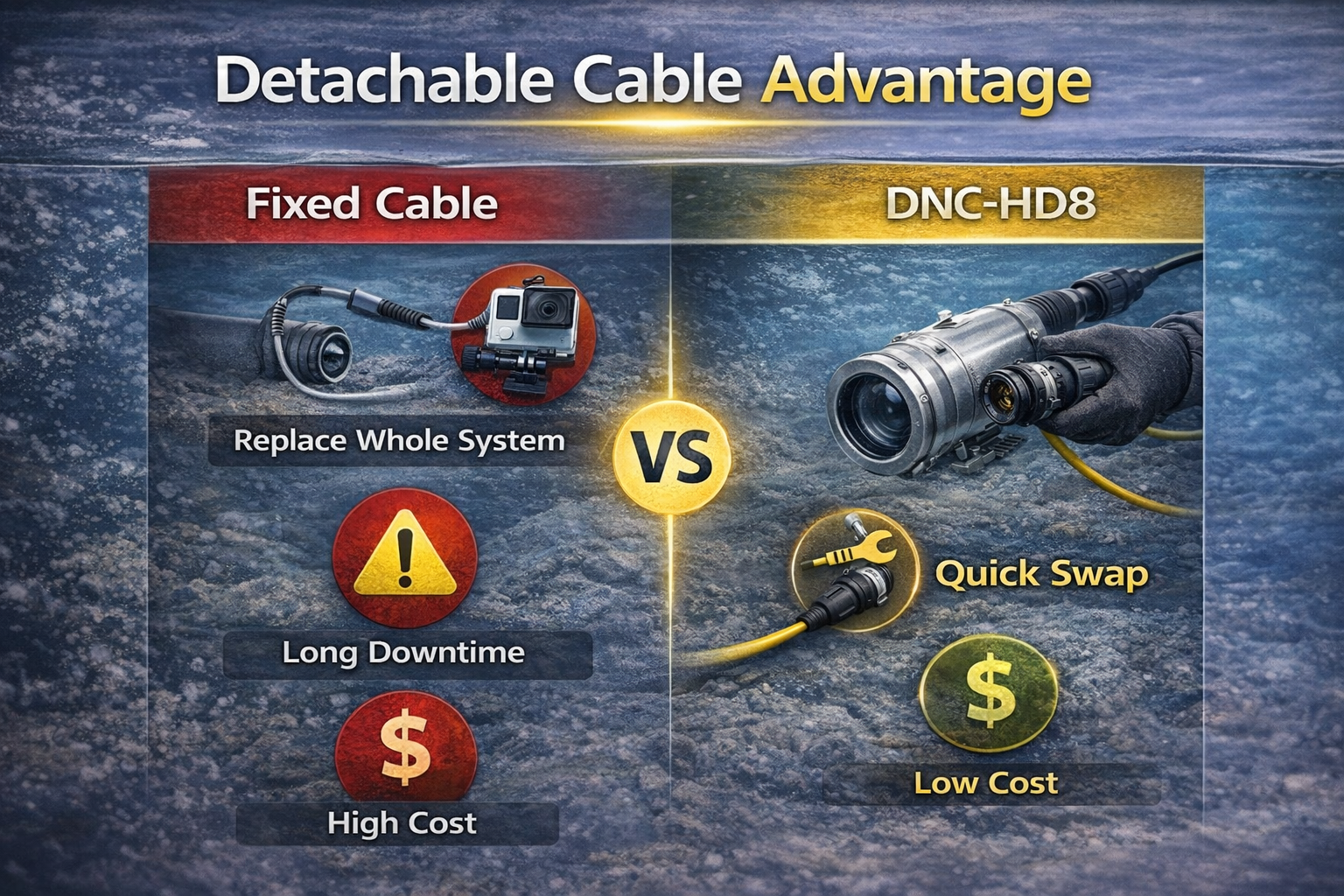
Why Housing Material Matters (Stainless Steel vs Aluminum)
Another critical factor in underwater systems is the housing material.
Many consumer housings are made from aluminum. While aluminum is suitable for short-term use, it is less reliable in aggressive environments.
- Chlorinated water (pools) accelerates corrosion
- Saltwater increases long-term degradation
- Continuous submersion stresses the material
Stainless steel is built for these conditions.
- Higher corrosion resistance
- Better for saltwater and chlorinated environments
- Reliable for long-term deployment
This is why professional systems like the DNC-HD8 use stainless steel housing for continuous operation.
When You Should NOT Use GoPro
- Live video monitoring
- Long-duration recording
- Inspection work
- Professional or industrial use
When GoPro Still Makes Sense
- Short underwater clips
- Recreational use
- Portable filming
But it is not designed for continuous underwater live video systems.
Recommended Solution
If your project depends on reliable underwater video, you need a dedicated system.
See Professional Underwater Camera System (DNC-HD8)
Designed for:
- Inspection
- Aquaculture
- Offshore operations
- Pool monitoring
Final Conclusion
GoPro is a camera. An underwater camera system is a solution.
If you need reliable, continuous video underwater — the difference is fundamental.
Frequently Asked Questions
Can GoPro be used for underwater live streaming?
GoPro is not designed for underwater live streaming. WiFi signals do not travel through water, and HDMI becomes unstable over long distances. It works for short recordings but not for continuous live video.
What is the best underwater camera system for inspection?
Professional underwater camera systems with SDI video, surface power, and remote control are the best choice for inspection. These systems provide stable video and unlimited runtime.
Why is SDI better than HDMI underwater?
SDI is more stable over long cable distances and is designed for professional video transmission. HDMI signals degrade quickly underwater, especially with multiple connections and long cables.
What cable length is best for underwater camera systems?
It depends on your application. Common lengths are 30m, 50m, and 100m. Longer distances may require different signal formats such as 1080i for stability.
Why is stainless steel better than aluminum underwater?
Stainless steel provides higher corrosion resistance in saltwater and chlorinated environments. It is more reliable for long-term underwater use compared to aluminum housings.
Can the cable be replaced if damaged?
Yes. Professional systems like the DNC-HD8 use a detachable cable design, allowing quick replacement without sending the entire system for repair.